What builders, contractors, and construction companies must understand now
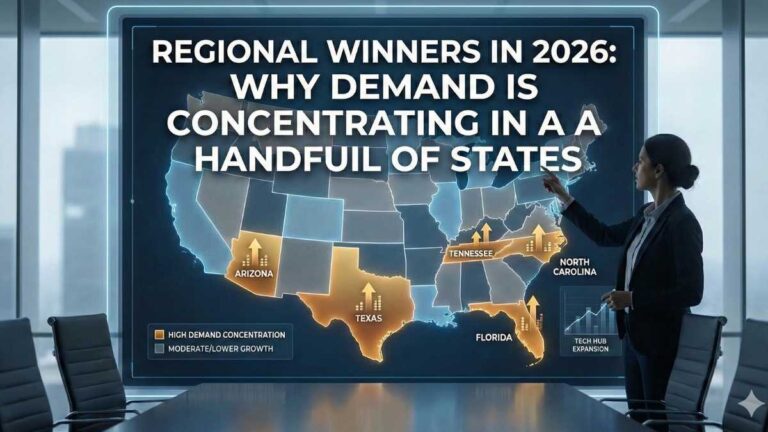
The U.S. construction market in 2026 is not slowing down — it’s concentrating.
While national headlines often speak about uncertainty, interest rates, and labor shortages, the reality on the ground is more precise: demand is flowing aggressively into specific states, and builders who understand this shift early are positioning themselves to win more projects, better contracts, and higher-quality clients.
Table of Contents
Toggle
This is not a trend based on opinion.
It’s a structural movement driven by population growth, capital migration, infrastructure investment, data center expansion, and regional economic policy.
In 2026, construction is no longer evenly distributed across the United States.
Some states are clearly winning.
Others are stagnating.
And the difference between growth and irrelevance is no longer craftsmanship alone — it’s strategy, positioning, and visibility in the right markets.
The new construction reality in 2026
For decades, construction followed predictable national cycles.
In 2026, that model is broken.
What we are seeing now is:
• Capital moving faster than labor
• Developers targeting fewer, safer regions
• Builders competing inside hyper-local markets
• Clients researching contractors before making contact
This creates a new reality:
If your company is not positioned in — or visible to — high-growth regions, demand will not “find you.”
Why Demand Is Concentrating Instead of Spreading
Several forces are acting simultaneously:
1. Population Migration
Americans continue to move away from high-cost, high-tax regions toward states with:
• Lower cost of living
• Business-friendly policies
• Faster permitting processes
• Strong job creation
Construction follows people.
2. Capital Risk Management
Developers, investors, and institutional capital are risk-averse in 2026.
They prefer:
• Regions with predictable regulation
• Strong demographic growth
• Infrastructure investment pipelines
3. Infrastructure & Data Center Expansion
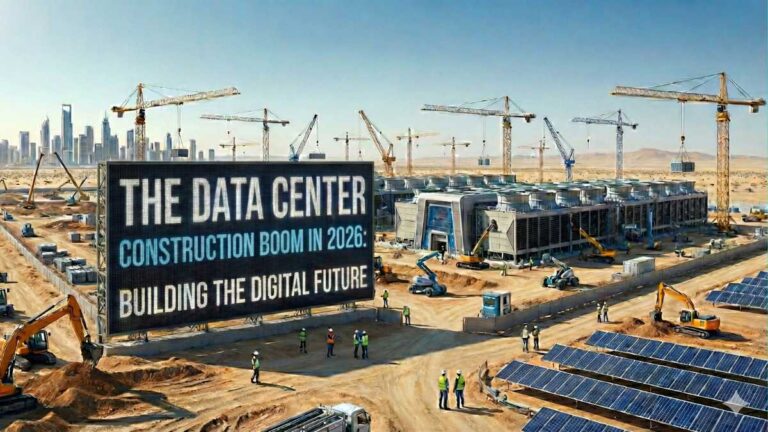
Digital infrastructure is one of the biggest construction drivers of the decade.
Data centers, logistics hubs, energy facilities, and industrial parks are being built where power, land, and permits align — not everywhere.
The clear regional winners in 2026
Let’s break down the states that are consistently absorbing demand.

Texas — the epicenter of construction momentum
Texas is not just growing — it’s accelerating.
Why Texas dominates:
• Massive population growth
• Corporate relocations
• Data centers and logistics hubs
• Pro-development regulation
• Strong residential and commercial demand
Cities like:
• Dallas–Fort Worth
• Austin
• Houston
• San Antonio
are experiencing simultaneous residential, commercial, and infrastructure expansion.
For builders, this means:
• Higher competition
• Bigger project pipelines
• Clients who demand professionalism and structure
In Texas, unprepared contractors are filtered out fast.
Florida — Construction Fueled by Migration and Capital
Florida remains one of the strongest construction markets in 2026.
Drivers include:
• Domestic migration
• International investment
• Hospitality and multi-family projects
• Infrastructure upgrades
• Roofing and storm-related construction demand
Markets like:
• Miami
• Fort Lauderdale
• West Palm Beach
• Tampa
• Orlando
are seeing intense contractor competition.
In Florida, visibility is not optional.
Builders without:
• Strong websites
• Local SEO
• Clear branding
are losing projects before the first call.
Arizona — Growth Without the Legacy Constraints
Arizona continues to attract:
• Manufacturing
• Logistics
• Semiconductor and data center projects
Phoenix and surrounding areas benefit from:
• Land availability
• Business-friendly environment
• Infrastructure investment
• Population inflow
This creates opportunity — but also fast-moving competition.
Arizona builders who scale successfully in 2026 are:
• Highly structured
• Digitally visible
• Operationally efficient
Georgia — the southeast powerhouse
Georgia, especially metro Atlanta, has become a construction magnet.
Key drivers:
• Logistics and warehousing
• Transportation infrastructure
• Corporate expansion
• Population growth
Georgia is a market where:
• Mid-size contractors can scale quickly
• Professional branding creates trust
• Local SEO determines visibility
In 2026, Atlanta is not forgiving to companies that look disorganized online.
North Carolina — sustainable growth, not hype
North Carolina represents a different kind of winner.
Growth is:
• Slower than Texas or Florida
• More stable
• Highly diversified
Key sectors:
• Research parks
• Healthcare construction
• Residential development
• Data centers
Cities like:
• Raleigh
• Charlotte
• Durham
favor contractors with:
• Clear positioning
• Long-term credibility
• Professional communication
Virginia & Ohio — the data center corridor
Northern Virginia and parts of Ohio are becoming digital infrastructure hubs.
Data centers drive:
• Specialized construction
• Long-term contracts
• Strict compliance requirements
These projects favor contractors who:
• Look established
• Communicate clearly
• Operate with precision
In these regions, branding and online presence act as pre-qualification tools.

The strategic mistake many builders will make
Many construction companies will read about regional growth and think:
“We’ll just follow the demand.”
That approach fails in 2026.
Why?
Because demand does not reward companies that arrive late, unprepared, or invisible.
High-growth regions also mean:
• Higher competition
• More informed clients
• Faster filtering of contractors
What regional concentration means for contractors
1. Competition Becomes Local, Not National
You are no longer competing with “construction companies.”
You are competing with:
• Builders in your city
• Contractors ranking on Google locally
• Companies showing authority online
2. Digital Presence Is Regional Infrastructure
Your website, SEO, and content must reflect:
• Your location
• Your market
• Your specialization
Generic marketing fails in concentrated markets.
3. Branding Reduces Risk for Clients
In high-growth states, clients choose:
• The safest option
• The clearest communicator
• The most professional presence
GEO reality: why location still decides everything
Search behavior in 2026 proves this reality:
• “construction company near me”
• “builder in Dallas”
• “roofing contractor Florida”
• “commercial contractor Atlanta”
• “construction company Phoenix”
If your company is not optimized for local GEO search, you are invisible where decisions happen.
Regional winners dominate because they are:
• Present
• Clear
• Easy to evaluate

How winning builders are positioning in 2026
They don’t wait for referrals alone.
2026 is not about being everywhere.

FAQ — Regional Winners in 2026: Why Demand Is Concentrating in a Handful of U.S. States
1 – Which U.S. states are leading construction demand in 2026?
Texas, Florida, Arizona, Georgia, North Carolina, Virginia, and Ohio are among the strongest growth markets, driven by population migration, infrastructure investment, and digital economy expansion.
2 – Why is construction demand concentrating instead of spreading nationally?
Capital, labor, and developers are prioritizing regions with predictable regulation, demographic growth, and infrastructure pipelines, reducing risk and increasing return on investment.
3 – How does regional growth affect competition among contractors?
Competition becomes more intense and localized. Contractors must differentiate through branding, visibility, and professionalism rather than relying only on technical skill.
4 – Is local SEO really that important for construction companies?
Yes. Most clients search by location. Without strong local SEO and GEO optimization, contractors are invisible where real decisions happen.
5 – Do data centers really impact construction demand?
Absolutely. Data centers drive large-scale, long-term construction projects and favor contractors with strong compliance, structure, and credibility.
6 – Can small and mid-size builders compete in high-growth states?
Yes, but only with clear positioning, professional branding, and strong digital presence. Unstructured companies are filtered out early.
7 – What is the biggest mistake builders make when entering growth regions?
Arriving unprepared — without clear messaging, online credibility, or operational structure — assuming demand alone will generate contracts.
8 – How should contractors adapt their marketing to regional concentration?
Marketing must be local, authoritative, and structured, aligning website, SEO, content, and branding with the specific market they serve.